Historic architecture across Suffolk County presents structural vulnerabilities directly beneath first-floor living spaces. Brownstone footings along Back Bay and Beacon Hill rely on fieldstone and lime mortar that…
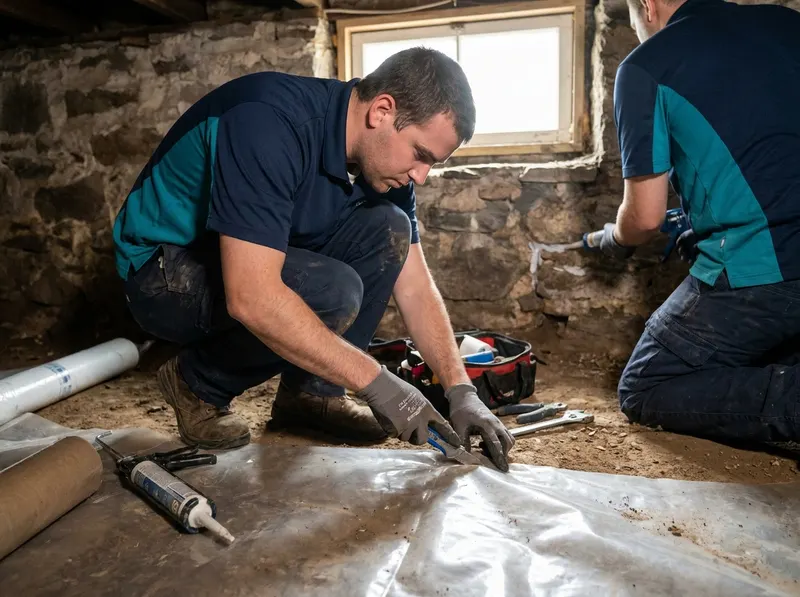
Historic architecture across Suffolk County presents structural vulnerabilities directly beneath first-floor living spaces. Brownstone footings along Back Bay and Beacon Hill rely on fieldstone and lime mortar that degrade after decades of hydrostatic exposure. When groundwater vapor wicks upward through exposed dirt or cracked sub-slabs, it establishes elevated relative humidity exceeding 70 percent. This microclimate attracts subterranean termites, camel crickets, and Norway rats, which exploit unsealed utility penetrations along the foundation perimeter to establish nests inside wall cavities. Mechanical sealing eliminates the moisture vector and seals every structural breach with non-degrading physical barriers.
Treatment begins by securing the foundation envelope. Decaying lime joints in 19th-century rubble walls receive structural repointing using hydraulic barrier cements. Technicians seal sub-floor gaps around cast-iron soil stacks, gas lines, and electrical conduits using high-density expanding foams laced with steel fabric to stop rodent gnawing. Dirt crawlspaces common in older multi-family structures throughout Dorchester, Jamaica Plain, and Charlestown are leveled and lined with continuous 12 to 20-mil reinforced polyethylene membranes. These vapor retarders run up foundation walls to a line three inches below the mudsill, where they are mechanically anchored with masonry fasteners and polyurethane sealants to maintain an inspectable termite check strip.
Selecting permanent structural sealing over repetitive chemical spraying delivers long-term stability for historic structures. Routine pesticide broadcast treatments degrade inside damp crawlspaces within 30 to 90 days, requiring recurring subscriptions without solving structural moisture problems. Mechanical vapor and pest sealing establishes a permanent barrier that lowers basement relative humidity to manageable levels, preserves structural timber framing, and stops pests before they reach primary living spaces. Work proceeds without evacuating multi-family residences, and low-VOC mechanical installations preserve interior air quality in poorly-ventilated basements typical of the South End and North End.
Every job gets a firm, written price after a free on-site visit.
Tell us about your basement crawlspace vapor and pest sealing job in Boston and we'll send a clear, written quote, usually the same day.
 Merixa Pest Treatment