Interior flea and tick infestations in Boston properties present distinct architectural challenges, particularly inside historic South End, Back Bay, and Beacon Hill row houses. Older heart-pine subfloors, gaps along…
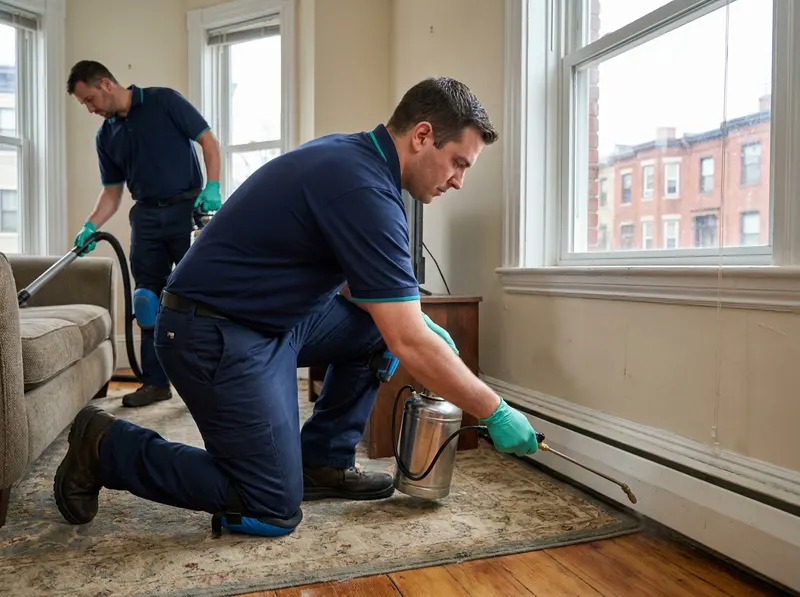
Interior flea and tick infestations in Boston properties present distinct architectural challenges, particularly inside historic South End, Back Bay, and Beacon Hill row houses. Older heart-pine subfloors, gaps along 19th-century baseboards, and lath-and-plaster wall cavities trap flea pupae, protecting them from surface store-bought remedies. Unregulated over-the-counter foggers disperse airborne toxins without penetrating dense carpet padding or historic flooring cracks, leaving dormant cocoons intact to trigger repeat hatches weeks later. Clinical remediation requires precise physical vacuum extraction to trigger immediate cocoon emergence, followed by targeted application of synthetic pyrethroids combined with an Insect Growth Regulator (IGR) such as pyriproxyfen. This prevents larvae from pupating into reproductive adults.
For residential properties spanning brick multi-families in Dorchester and Charlestown to high-density apartments in Allston-Brighton and the North End, treatment protocol hinges on occupant safety and ventilation realities. In historic homes where airflow is limited by vintage double-hung windows, blanket broadcast spraying is counterproductive and hazardous. Instead, targeted micro-treatments isolate resting zones, baseboards, and furniture footings without saturating ambient airspace. Occupants and domestic animals must vacate the property for exactly 3 to 4 hours while liquid residuals dry onto structural surfaces. Once dry, the non-volatile residue binds to target areas, posing no transmissible inhalation risk through residential heating ducts.
Structural eradication requires a single, coordinated intervention rather than perpetual monthly contracts. The technical trade-off between isolated topical treatments and comprehensive structural eradication centers on life-cycle disruption: addressing only visible adult biting pests leaves 95 percent of the biomass untouched in the form of microscopic eggs and pupae. Complete eradication demands three distinct phases: first, high-efficiency mechanical extraction across all floor seams and rug fibers; second, targeted chemical application stopping juvenile chitin synthesis; and third, mandatory follow-up mechanical vacuuming by property occupants 48 hours post-treatment to stimulate remaining pupae into active residual contact. This rigorous approach maintains historic architectural integrity while permanently restoring environmental safety.
Every job gets a firm, written price after a free on-site visit.
Tell us about your interior flea and tick eradication job in Boston and we'll send a clear, written quote, usually the same day.
 Merixa Pest Treatment