Cockroach gel-bait micro-treatments represent a decisive shift from legacy aerosol fogging to clinical entomological suppression. In historic masonry structures found in Beacon Hill, Back Bay, and the South End, broad…
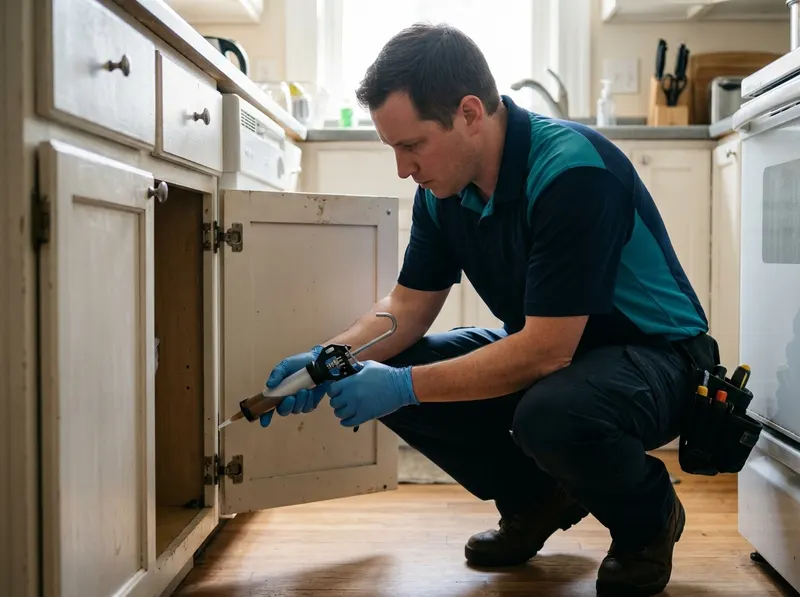
Cockroach gel-bait micro-treatments represent a decisive shift from legacy aerosol fogging to clinical entomological suppression. In historic masonry structures found in Beacon Hill, Back Bay, and the South End, broad chemical spraying fails because airborne pyrethroids drive roaches deeper into lath-and-plaster wall cavities, shared plumbing chases, and subflooring. Gel-baiting deploys stable, matrix-bound active ingredients directly into structural voids, cabinet hinge pockets, electrical junction perimeters, and appliance motor housings. Foraging nymphs and adults consume the bait, return to the nest, and transfer the active toxicant to harborages through horizontal transfer via coprophagy and necrophagy, collapsing the colony from within.
Micro-treatments fit properties requiring immediate colony suppression without vacating occupants or pets. Unlike fumigation or broad-spectrum perimeter wet sprays, baiting produces zero airborne particulates, volatile organic compounds, or odor, making it suitable for poorly ventilated historic row houses and multi-unit complexes in the North End, Charlestown, and East Boston. The clinical trade-off involves speed versus structural permanence: aerosol knockdowns yield immediate surface kills of visible insects but scatter the breeding core; gel baits take 3 to 7 days to trigger widespread colony mortality, but achieve thorough eradication of reproductive females and hidden juveniles.
Implementation follows a standard three-stage sequence. First, technicians inspect heat-generating appliances, under-sink utility penetrations, and baseline moisture zones using high-output LED inspection optics. Second, targeted 0.05- to 0.1-gram micro-dots of bait matrix are applied via precision syringe dispensers into cracks measuring 1/8-inch or smaller, spaced roughly 12 to 18 inches apart along active travel routes. Third, juvenile development is halted by applying non-spray insect growth regulators (IGRs) alongside sticky monitoring boards to verify nymph mortality and track population decline across successive reproductive cycles in Dorchester, Jamaica Plain, and Allston-Brighton properties.
Every job gets a firm, written price after a free on-site visit.
Tell us about your cockroach gel-bait micro-treatments job in Boston and we'll send a clear, written quote, usually the same day.
 Merixa Pest Treatment