Boston row houses built between 1840 and 1900 present unique structural vulnerabilities that standard bait programs fail to resolve. In neighborhoods like Back Bay, Beacon Hill, and the South End, shared masonry party…
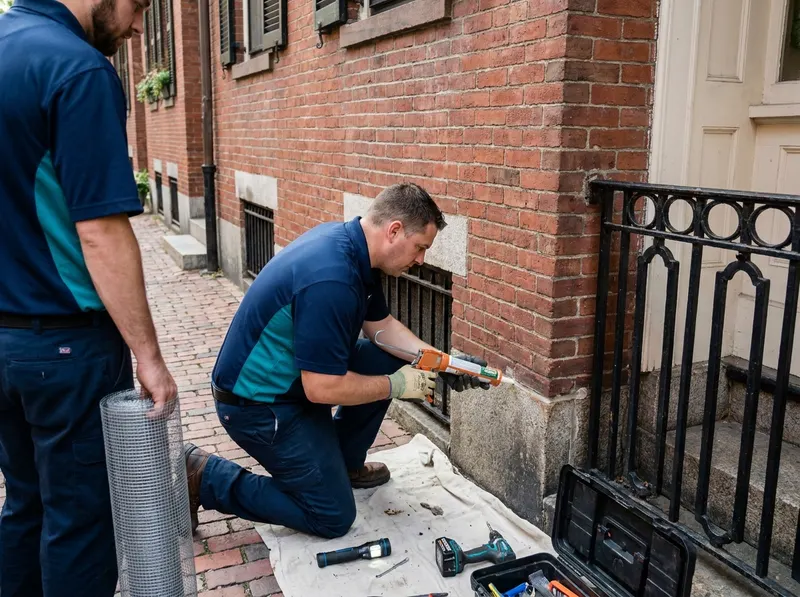
Boston row houses built between 1840 and 1900 present unique structural vulnerabilities that standard bait programs fail to resolve. In neighborhoods like Back Bay, Beacon Hill, and the South End, shared masonry party walls contain unmortared interstitial voids that permit rodent migration between adjoining buildings. Sub-sidewalk coal vaults, granite block transitions, and lime-mortar rubblestone foundations degrade over decades, creating subterranean highways directly into garden-level apartments and mechanical basements. Brownstone exclusion prioritizes physical barrier installation using breathable hydraulic lime mortars, copper mesh, and 16-gauge galvanized steel screen to arrest traffic without altering exterior architectural fabric or violating Boston Landmarks Commission standards.
Selecting permanent structural exclusion over recurring toxic bait stations is a decisive intervention designed to protect high-value real estate assets. While monthly rodenticide subscriptions merely suppress adult population numbers, leaving poisoned rodents to decay inside inaccessible lath-and-plaster cavities, physical exclusion mechanically eliminates access. The operational trade-off is front-end effort: exclusion requires extensive physical access to tight basement clearances, sub-floor utility chases, and decorative hearth voids, whereas chemical management requires only brief monthly surface visits. For properties facing high exterior rodent pressure along the commercial alleys of Newbury Street or around the food corridors of the North End, physical fortification halts indoor colonization definitively.
Older, poorly ventilated homes require strict material discipline to maintain indoor air quality. Boston brownstones feature dense, hydronic radiator heating loops and tight interior volumes where chemical vapor dispersal is unadvisable. The exclusion protocol relies entirely on mechanical closures: high-density silicone elastomers, stainless steel wire fabric, escutcheon plates clamped to steam risers, and structural masonry repointing along deteriorated sills. In areas like Charlestown and East Boston, settling foundations frequently pull away from wooden floor plates, opening 0.5-inch gaps behind baseboards; sealing these floor-wall junctions eliminates hidden pathways while allowing occupants to remain inside the building throughout the entire remediation process.
Every job gets a firm, written price after a free on-site visit.
Tell us about your historic brownstone rodent exclusion job in Boston and we'll send a clear, written quote, usually the same day.
 Merixa Pest Treatment